

Here’s a wonderful independent lab building software on top of wonderful ideas.
What’s cool about Ink & Switch?
Ink and Switch is an “independent research lab exploring the future of tools for thought”, with the goal of “helping scientists, journalists, and creative thinkers do important work with powerful tools that respect their humanity”.
They remind us that software ≠ evil. Not necessarily, not by default. That software can be all about wonderful ideas and worthy ideals, like end-user programming, malleability and agency, unbundling siloed apps and you own your data.
What’s especially cool is that Ink & Switch puts these ideas to work by producing not only essays and research, but prototypes and working software. Real software with real potential.
Software that asks questions like “why isn’t planning a trip easier, in spite all of these tools and information?”; or “why there so many to-do list apps that don’t quite fit my wants and needs, and thus fail to use any of them?”"; or even “why can’t I get my partner and/or family on the same page about grocery shopping and making dinner?”
Much like the Xerox PARC for the new wave of tools for thought. I hope that Ink and Switch is the kind of organization that can breathe a new, healthier and loftier soul to the new machines (agents!).
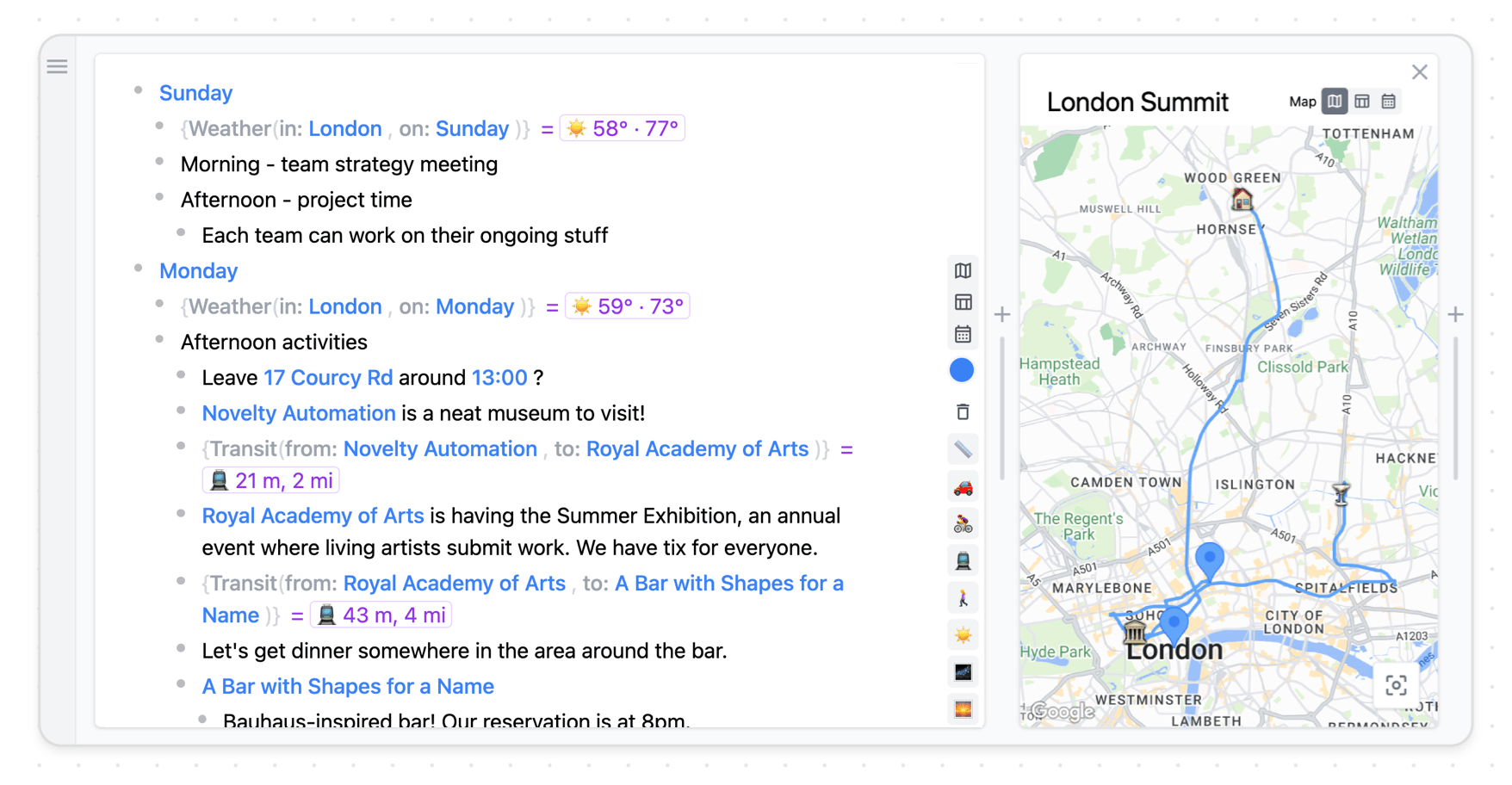
I highly encourage you to check out their research projects. Like Embark, a wonderful dynamic document to organize trips and travel plans:
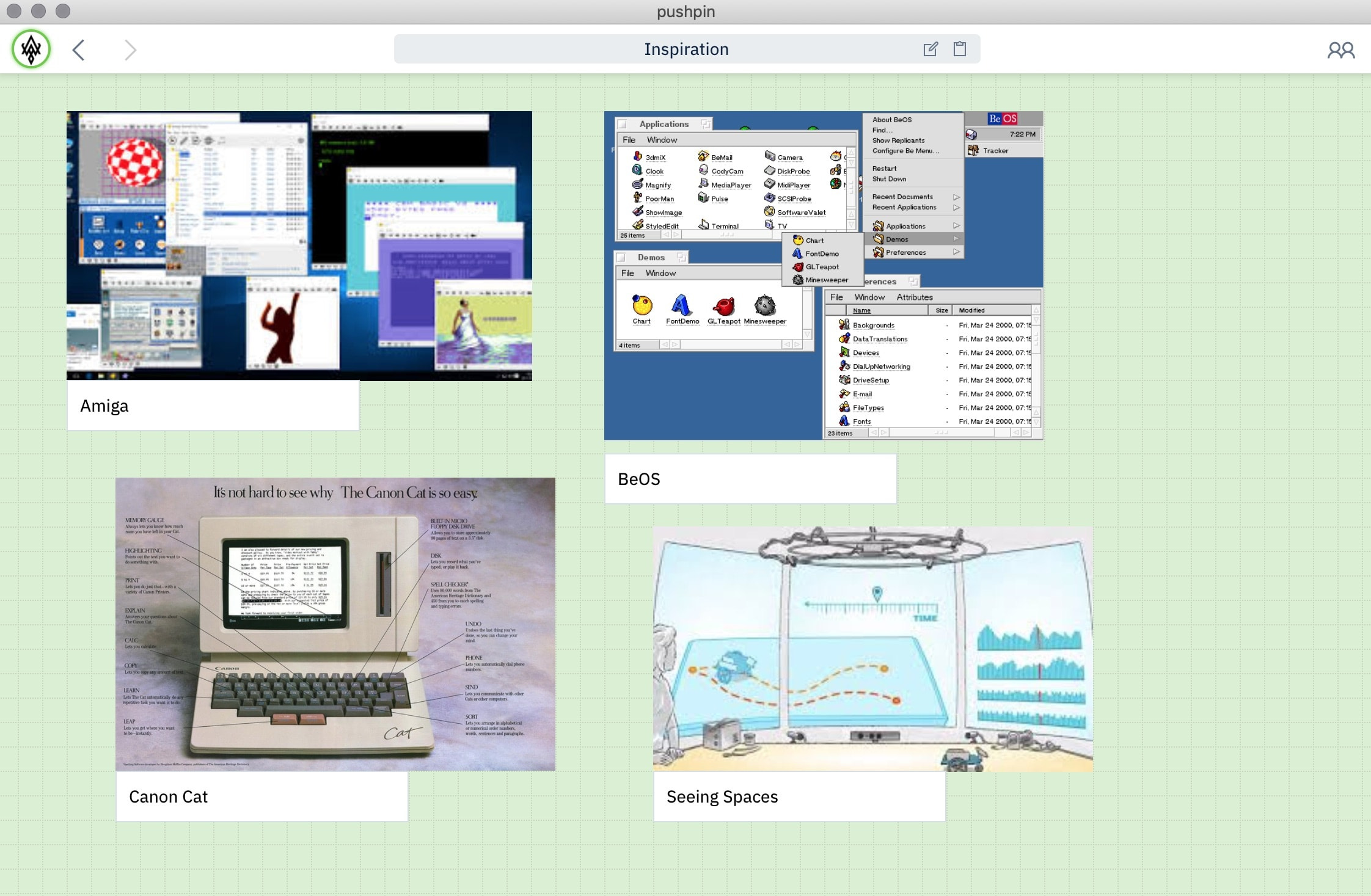
And PushPin, a collaborative corkboard with minimal dependence on the cloud and servers:
Read up, if you fancy, their rationale and motivations for building each of these software prototypes (products?). Product roadmaps written in prose poetry, each one an ode to the powerful feedback loop of elevating humans that make software to elevate humanity.
I’m convinced there should be more of this.
Choices maketh the app
Most – not all! – software we use is made by startups and big corporations. You know their motivations. But/and from reading Season 1 dispatches, you know that a lot of the software that those startups and corporations use – and therefore you and me and all of us – relies on open source software. And now you know the motivations of open source contributors, too.
For better or for worse, this lopsided production model is what we have, the one responsible for the magic and the surveillance, the convenience and the doom scrolling. And, importantly, it is also what we have to work with.
Ink and Switch is a hybrid in terms of that spectrum of motivations. They are steadfast in their belief that software can be much better than what it currently is, and that it can deliver on the wonderful potential for a computer: to be a bicycle for the connected mind.
Forget about patterns, libraries, or even code. At it’s core, software is made up of ideas, desires, motivations and processes that run in a computational environment.
Condensing that thought even further: software is made of choices!
All software that’s being made, sold, bought, designed and developed is encoded with those ideas, understandings and values, and the choices made by those who developed the software, what they – humans of flesh and bone, like you and me – think the world should be like, and working from their circumstances and constraints to make that world a reality.
Which – again – means that software isn’t inherently evil or good, life-changing or unnatural. The takeaway isn’t that but, instead, this: software cannot be neutral. Bias is smeared everywhere on every app you’ve ever used because choices maketh the app , and when these biases and tradeoffs are not made known explicitly, you are justified in thinking the worst.
There’s plenty of great software out there. P l e n t y. Made by open source contributors and curious, tinkering humans. Software made to spark joy, and software made like its a home cooked meal. None of the apps we use have to be blackboxes that hijack our best intentions with dark UI/UX patterns.
Ink and Switch is an organization that makes software, and the choices that went into making it, explicit and legible. You can go look at their code, and you can go ahead and read about their motivations, hold them accountable to them. You can choose to use their software or not. And with this inspiring knowledge, you can demand more of the makers of the apps that you do use.
Better yet, you can choose to build tools on top of, and elaborate on, their ideas. Build your own shovelware, but also build your own practices, even start new businesses, companies, and successful startups, based on their research and prototypes.
We need more experiments like the ones Ink and Switch is actively running. In the realms of science, democracy and technology, we need to let a thousand flowers bloom!